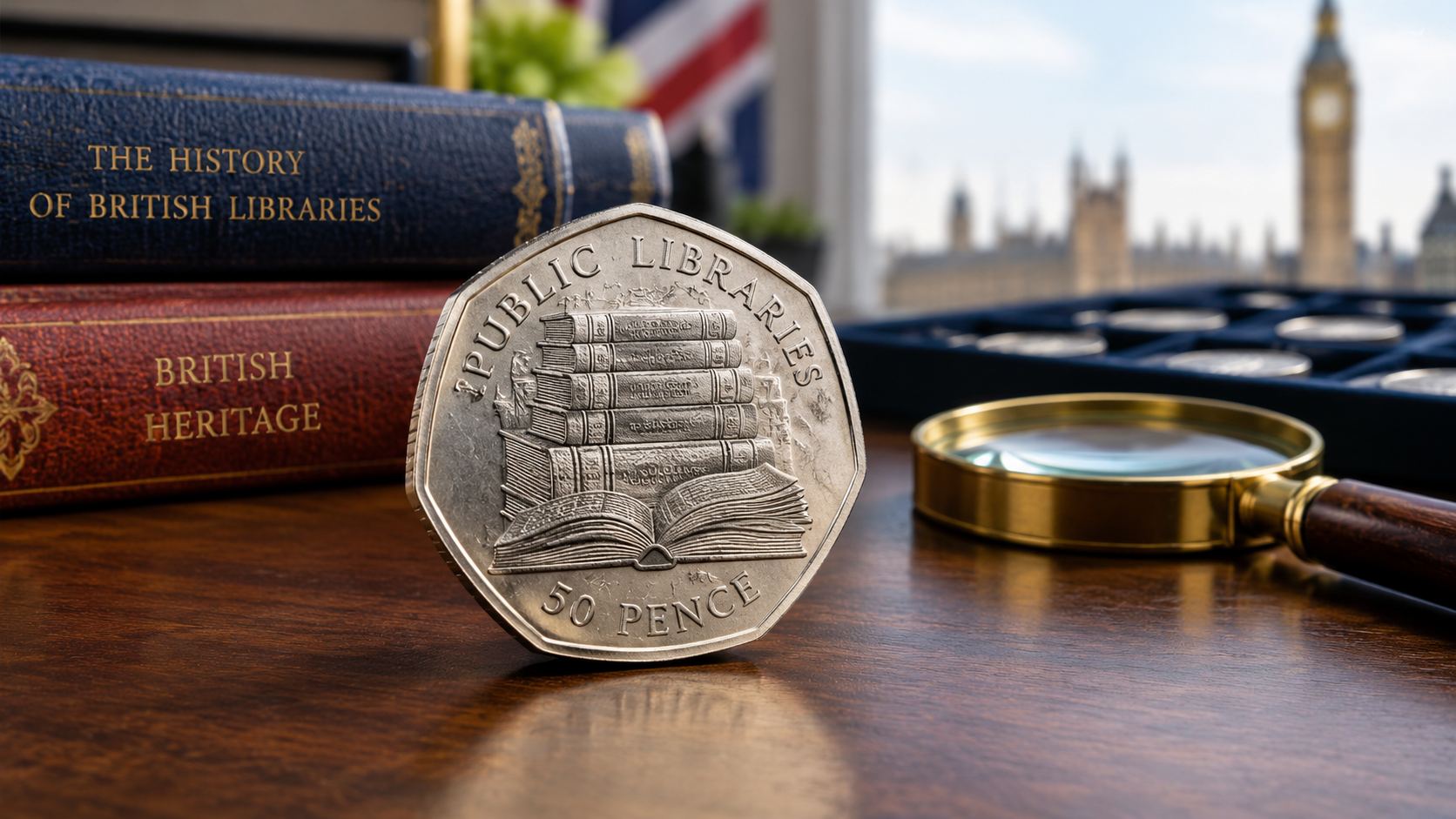
As we enter 2026, many are fascinated by the public library 50p value. It’s more than just a coin; it’s a cultural treasure for numismatists in the UK.
This coin honours the vital role of local public libraries. It’s not just for everyday use. It celebrates the power of books and learning in our society.
In this guide, I’ll help you understand this hobby better. We’ll look at mintage figures, how condition affects value, and how to check if a coin is real. My goal is to make you confident and informed whether you’re buying or selling.
The 2010 Public Libraries 50p and the story behind its release
The 2010 Public Libraries 50p is special in my collection. It honours the educational resources that have shaped our society. It shows how we value shared knowledge.
Why the Royal Mint issued the commemorative coin
The Royal Mint released this coin to celebrate the public library‘s role in British life. It immortalised the library on a 50p piece, showing its importance. It recognised the power of books in our lives.
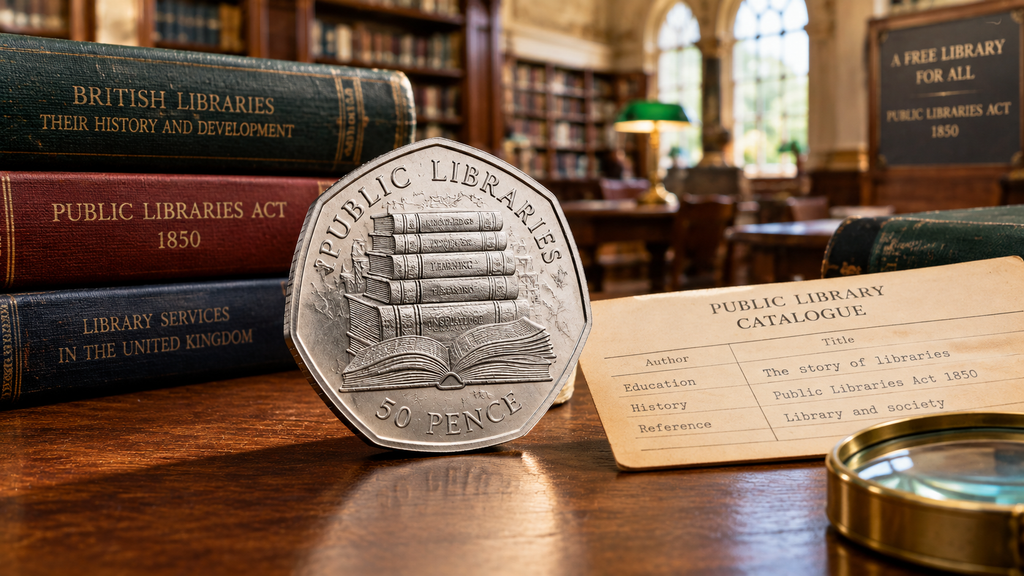
How the coin marked the centenary of the Public Libraries Act
This coin celebrates the 1850 Public Libraries Act. It allowed local councils to create free libraries. The coin honours the tradition of free reading material for all. It shows how libraries have evolved into learning hubs.
“The public library is the heart of a community, providing a gateway to knowledge that remains open to all.”
Mary Milner-Dickens’s design and its books-and-reading symbolism
Designer Mary Milner-Dickens captured the library experience in her design. Her work features a stack of books, symbolising the wealth of information. The design is simple yet profound, reflecting the joy of discovery in libraries.
The reverse design, denomination and date details
The coin’s reverse is detailed, showing:
- Denomination: ’50 PENCE’ at the base.
- Date: ‘2010’ is displayed to mark the issue year.
- Symbolism: A central stack of books, representing the library’s mission.
This design is loved for linking reading with our national history. It shows how a small coin can carry a big cultural message.
public library 50p value in today’s collecting market
Understanding the public library 50p value goes beyond the coin’s face. Not every commemorative piece is a treasure. The market’s reality is often more complex.
Collectors who do their research make better choices. It’s key to know the difference between a coin’s bank value and its auction price.
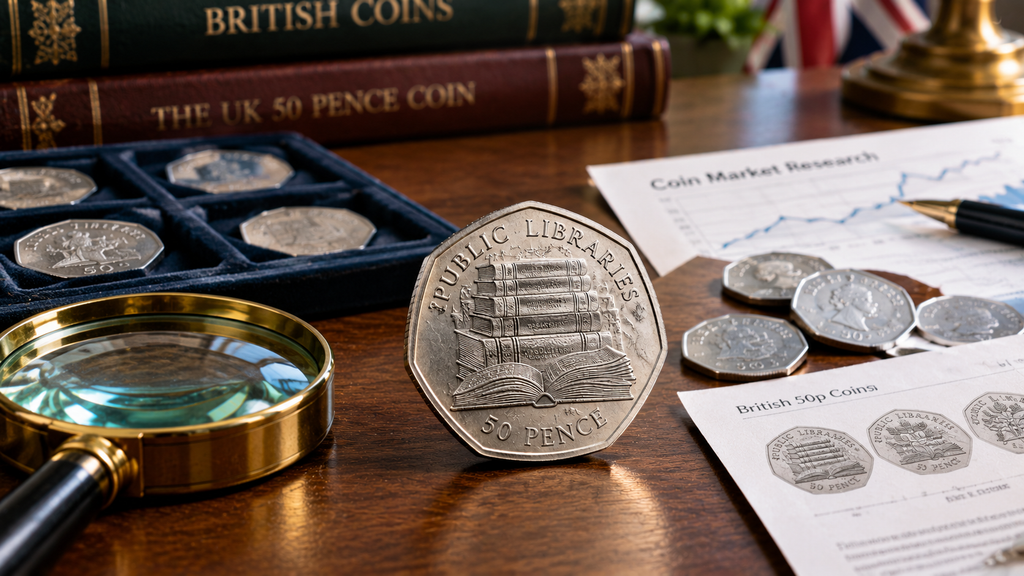
What a circulated example is normally worth
Found in your change? Manage your expectations. A circulated coin is usually worth 50p. Some collectors might pay a bit more for a clean one.
Millions were circulated, so they’re not rare. Any price increase is due to popularity, not scarcity.
How brilliant uncirculated and proof examples can command more
Collectors want Brilliant Uncirculated (BU) or Proof coins for their quality. These are made to a higher standard than pocket change.
These coins stay perfect because they’re protected. They often get a higher 50p value from serious collectors who value looks.
The difference between face value, catalogue value and selling price
It’s easy to mix up the coin’s values. The face value is what it’s worth as money. The catalogue value is an expert’s guess based on history.
The selling price is what matters most. It shows what buyers are willing to pay today. True value for money public library collecting means focusing on sales, not asking prices.
Why condition, packaging and provenance affect the final figure
The coin’s condition is key to its value. Scratches or cleaning can lower its appeal, even if it’s rare.
Original packaging and the coin’s history can increase its value. These add to a coin’s appeal and can raise its price.
| Coin Condition | Market Appeal | Typical Value Driver |
|---|---|---|
| Circulated | Low | Face value plus small premium |
| Brilliant Uncirculated | Moderate | Pristine surface quality |
| Proof | High | Original packaging and rarity |
Finding value for money public library coins takes patience. Knowing these factors helps build a satisfying collection.
Why the seven-million mintage does not automatically make it rare
The seven-million mintage of the public library coin tells only part of the story. This number is big, but it doesn’t mean the coin is easy to find or cheap. The 50p value and availability depend on more than just how many were made.
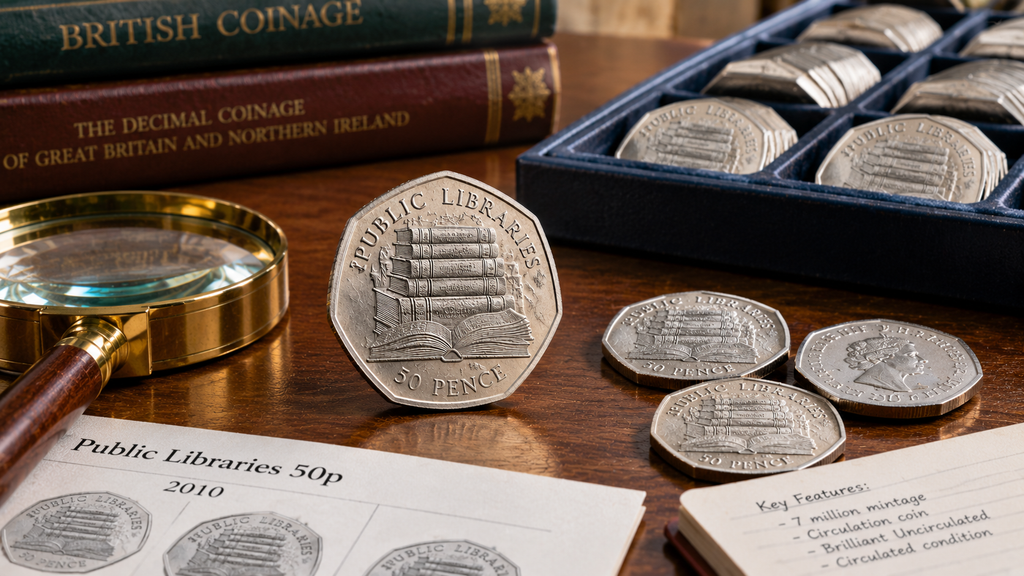
What the reported mintage tells me about availability
Mintage figures show how many coins were made by the Royal Mint. But, they don’t count coins lost, damaged, or kept by collectors. Many coins have left circulation, making them harder to find than the numbers suggest.
“A coin is only as common as its availability in the wild, regardless of what the official production records might claim.”
How demand, condition and buyer interest influence scarcity
Scarcity isn’t just about how many coins were made. It’s also about how many are left and how much people want them. When collectors look for a certain coin, it becomes harder to find.
- Condition: Coins in good shape are rarer than worn ones.
- Demand: More collectors can make a coin seem scarce.
- Hoarding: Some keep coins as keepsakes, reducing the number available.
Why rarity claims on social media and auction listings need checking
I often see claims online that a coin is worth a lot. Remember, a high price on an auction site doesn’t always mean it’s worth that much. The 50p value can be different.
Check completed sales, not just listings. If someone says a coin is rare, ask for proof or look at a reliable price guide.
The difference between a scarce coin and a genuinely rare error
It’s key to tell apart a coin that’s hard to find and one with a minting error. A scarce coin is a standard issue that’s hard to find. An error coin is a mistake during making.
| Feature | Scarce Coin | Rare Error |
|---|---|---|
| Origin | Standard production | Minting fault |
| Frequency | Commonly found | Extremely limited |
| Value | Market-driven | High premium |
Always be cautious when someone calls a standard public library coin a rare error. Most unusual marks are just from damage over time.
Latest 2026 collector news, listings and Royal Mint market signals
The market for the Public Libraries 50p is changing in exciting ways. It’s key to know the real trends from just guesses. Official data helps me understand the public library 50p value better.
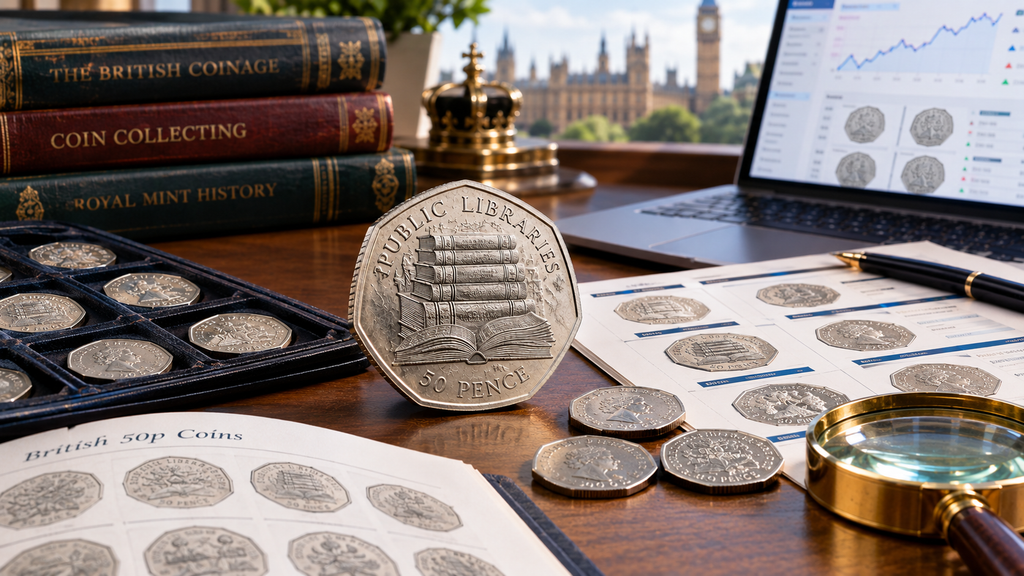
What current auction and marketplace listings reveal about asking prices
Online platforms often show high prices that don’t match the real market. Remember, a listing is just a request, not a sale. I look for “sold” listings to see what buyers really pay.
How recent collector discussions are changing perceptions of the coin
Online forums and social media are full of talk about public library promotions and coin availability. These talks can raise expectations. I stick to verified data to avoid rumors.
Which official Royal Mint details should be confirmed before publication
I check the Royal Mint archives before sharing news. Verifying mintage figures and release dates stops false info. Accuracy is my priority when talking about this coin’s history and tech.
How to report changing prices without presenting an asking price as a sale
When I talk about price changes, I make it clear. I separate active listings from actual sales data. This way, readers know the difference between a seller’s wish and the real market.
| Data Type | Market Insight | Reliability |
|---|---|---|
| Active Listing | Seller’s desired price | Low |
| Completed Sale | Actual market value | High |
| Promotional Offer | Marketing incentive | Variable |
How to identify an authentic Public Libraries 50p
Let’s explore how to check if your 50p coin is real. When starting your collection, knowing what to look for is key. Always use a careful method when examining each coin.
Checking the date, denomination, portrait and reverse lettering
First, check the basics. The 2010 coin should clearly show “2010” on the back. Look for “FIFTY PENCE” around the design of books and reading motifs.
On the front, the coin should have Queen Elizabeth II’s portrait by Ian Rank-Broadley. The letters should be sharp and clear. If they look soft or rounded, it might be fake.
Spotting wear, scratches, toning and cleaning damage
Circulated coins often have scratches or minor dings. These are normal if the coin has been used. But, avoid coins that have been cleaned too harshly.
Toning is natural and can add character to a coin. But, heavy or uneven discolouration might hide damage. Always inspect the edges to check for smoothness and no tampering.
Recognising possible minting errors without mistaking damage for rarity
It’s easy to get excited about a coin’s odd mark. But, most marks are just damage from handling. True minting errors, like a die crack, are rare and happen during minting.
If you think you have a minting error, compare it with known examples. Not every unique mark increases a coin’s value. Often, these marks come from years of use.
When professional authentication or grading may be worthwhile
If you’re investing in a high-grade coin for a budget-friendly public library collection, getting it professionally graded is wise. Services can confirm the coin’s authenticity and condition. This is helpful for coins sold as “Brilliant Uncirculated” or “Proof” quality.
| Condition | Surface Quality | Lettering Detail | Collector Value |
|---|---|---|---|
| Circulated | Visible scratches | Slightly worn | Low |
| About Uncirculated | Minimal marks | Sharp | Moderate |
| Brilliant Uncirculated | Flawless | Perfect | High |
| Proof | Mirror-like | Exceptional | Premium |
Buying, selling and avoiding misleading 50p value claims
When you buy or sell a Public Libraries 50p, knowing its real value is key. High numbers can be misleading. Always look beyond the surface to make a smart financial choice.
Comparing completed sales instead of inflated asking prices
Sellers often list coins at too high prices, hoping for quick profits. These prices don’t show the coin’s true market value. Look for completed sales instead.
“The true value of any collectible is determined by what a buyer is willing to pay, not what a seller hopes to receive.”
Choosing between a local dealer, auction platform and private sale
There are many ways to trade your coins, each with its own benefits. A local dealer offers quick payment and advice, great for newbies. Online auction platforms reach more people, while private sales might save on costs.
Understanding buyer fees, postage, packaging and seller commissions
Before you trade, know the hidden costs. Buyer premiums and seller commissions can cut into your profit. Remember to include costs for safe postage and packaging to protect your coins.
Why public library deals, public library discounts and 50p public library books are separate from coin collecting
Search engines sometimes mix up coin collecting with library services. You might find public library deals or best public library offers when looking for coin values. These are not part of the numismatic market.
- Public library discounts and public library promotions are for library memberships or reading services.
- Borrowing books and finding affordable public library books are great for the community.
- 50p public library books are just items sold in library shops, not rare coins.
Keeping affordable public library books and community resources distinct from a commemorative coin’s market price
Remember, local services and reading material from your council are public resources. They’re not the same as the market for commemorative coins. Keeping these separate helps you focus on your collection goals.
You May Also Read: Lookalikey
Conclusion
Collecting coins needs a keen eye and a good grasp of the market. The value of a 50p coin from the public library depends on its condition and demand, not just social media. Look at completed sales to see what collectors are really paying.
With seven million made, this coin is within reach for many collectors. Always check if your coin is real before thinking it’s rare. This step keeps your investment safe and avoids problems with damaged coins.
This coin reminds us of the importance of local services. These services are key to our community, giving everyone access to knowledge. By valuing this coin, you honour the history of these resources, not just the coin itself.
I suggest you keep exploring the world of coins with a clear mind. Your interest in 50p coins helps keep their history alive. Enjoy collecting and learning about the stories each coin shares with us.
FAQ
What is the current public library 50p value for a collector in 2026?
The value of a public library 50p coin depends on its condition. A circulated coin is usually worth its face value or a bit more. But, a Brilliant Uncirculated or Proof coin from the Royal Mint can be much more valuable.I always suggest checking completed listings to see what people are really willing to pay. This helps you find the best deals for your collection.
Is the 2010 Public Libraries 50p rare given its seven-million mintage?
A coin with a seven-million mintage isn’t as rare as the Kew Gardens 50p. Yet, many have been kept as keepsakes or lost over the years. This keeps the value of the public library 50p steady.The real scarcity is in the coin’s quality, not just how many were made.
How can I distinguish between the coin’s value and general public library deals?
It’s easy to get confused by search results. But, public library deals usually mean local services and educational resources. If you’re looking for 50p books, it’s about a book sale, not a coin investment.The coin is a commemorative piece, while borrowing books is a library service.
Who designed the Public Libraries 50p and what does it represent?
Mary Milner-Dickens designed the coin’s reverse. Her design shows a bookshelf, symbolising books and community resources. It was issued to celebrate the Public Libraries Act’s anniversary.
Where can I find the best public library offers for this specific coin?
For the best deals on commemorative coins, I avoid social media hype. I look at reputable auction platforms or established coin dealers. This way, I pay a fair price for the coin.
Are there any known errors that increase the 50p value?
I often see claims of “rare errors” online, but most are just signs of wear. Before assuming a coin is valuable, I check its date, denomination, and condition. If you think a coin has a minting error, get it checked by a professional.
Does the 2026 market show an upward trend for this coin?
In 2026, the market shows a modest value for circulated coins. But, there’s growing interest in Royal Mint sets. As people value libraries more, this coin’s popularity among collectors continues to grow.