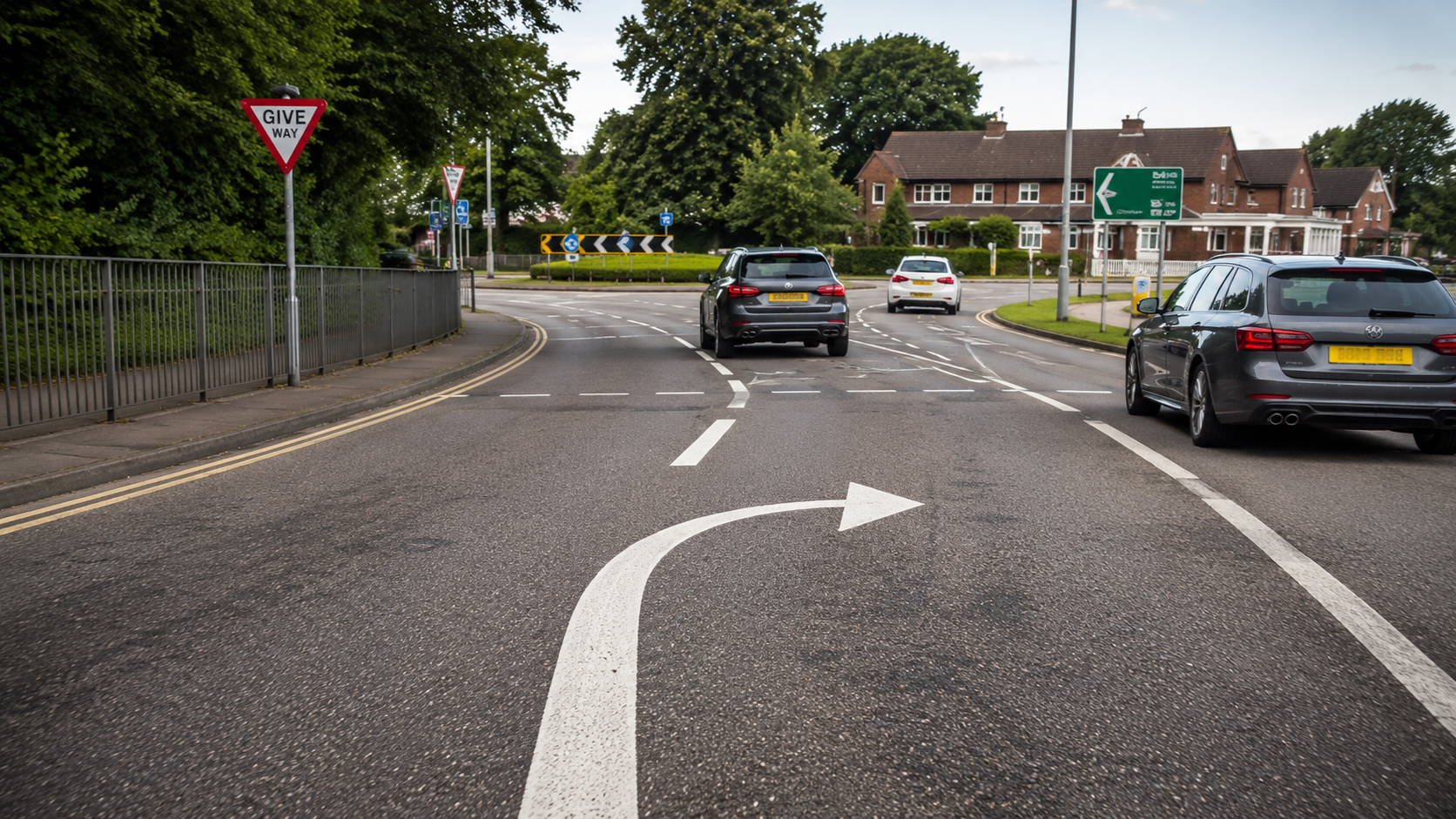
Ever felt unsure at a busy junction about which lane to take? I often find that understanding the curved arrow road marking mean is key for road safety on my daily drive. These symbols give us important instructions to navigate complex intersections confidently.
Knowing the curved arrow road sign meaning is more than just passing a test. It’s about keeping yourself and others safe. Every driver should be able to quickly spot these visual cues. Recognising them helps us make better decisions about where to position ourselves in the lane and who has priority.
In this guide, I’ll share tips to help you get the hang of these signals. We’ll look at the Highway Code and staying alert in changing traffic. Let’s make your next drive smoother and safer by improving your driving skills today.
What the curved arrow road marking mean is telling UK drivers
Learning about the curved arrow road marking mean is essential for UK drivers. These markings on the road give clear instructions on which lane to take. They help keep traffic moving smoothly.
By paying attention to these symbols, I can prepare for complex junctions early. This makes my drive safer and more confident.
Why a curved arrow is different from a standard directional arrow
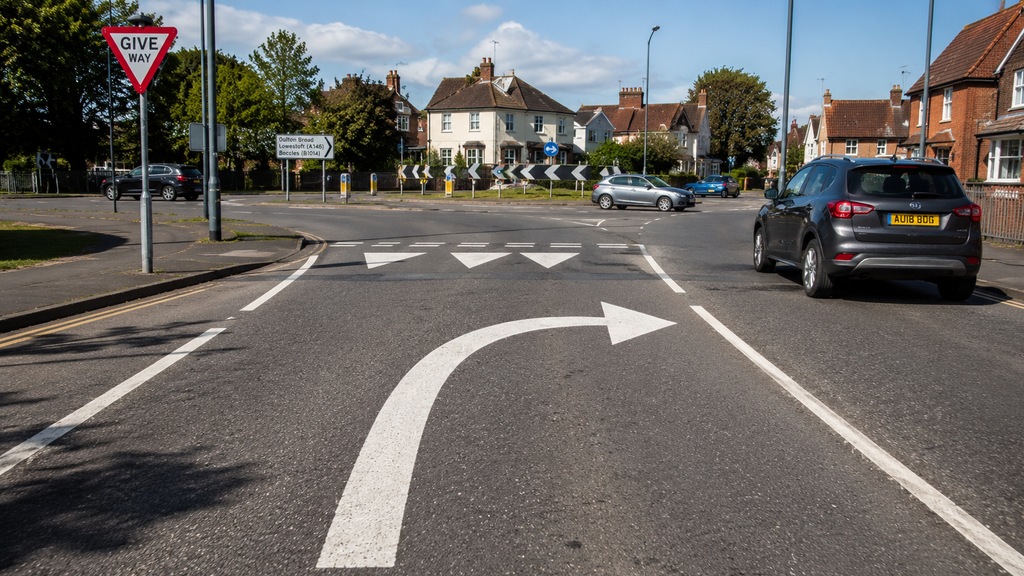
A straight arrow tells you to keep going in the same direction. But a curved arrow warns you that your path will change. It means you’re heading for a turn or a lane merge.
Knowing this helps me avoid sudden lane changes. These directional arrows guide me to the right position before a turn.
How the arrow shows a required or recommended change of direction
The meaning of a curved arrow depends on its shape and where it is. A sharp curve usually means you must turn into a filter lane or roundabout exit. A less sharp curve might suggest a gentle lane shift.
I check the lines around the arrow to see if the turn is mandatory. A solid line means you must follow the arrow’s path, as per the Highway Code.
Why the surrounding lane markings and road layout matter
Road markings are part of a bigger picture. Lane lines and markings around the arrow tell you more about what to do. A curved arrow with dashed lines suggests a recommended path for smoother lane changes.
The table below shows how different markings affect my driving:
| Marking Type | Primary Purpose | Driver Action |
|---|---|---|
| Straight Arrow | Lane continuation | Proceed forward |
| Curved Arrow | Change of direction | Prepare to turn or shift |
| Hatched Markings | Road separation | Avoid driving on area |
| Solid White Line | Lane boundary | Do not cross |
Recent UK road safety news affecting how drivers read road markings
Keeping up with traffic regulations is key for safe driving. The rules of the road change, aiming to protect everyone on the roads.
What the latest Department for Transport and Highway Code guidance says
The Department for Transport updates road signage guidance often. These changes are reflected in the Highway Code, a must-read for UK drivers.
It’s important to check these updates regularly. This ensures I understand road markings correctly and legally.
Where councils are changing directional markings, junction layouts and traffic signs
Local councils are updating urban junctions for better traffic and safety. You might see new lane markings or directional arrows.
These changes aim to reduce confusion at busy spots. It’s essential to stay alert as councils tailor these changes to their areas.
How reported collisions and road-safety campaigns are influencing driver advice
Recent road safety campaigns inform new markings. If accidents happen at certain junctions, clearer signs are added.
These efforts help prevent accidents by guiding drivers better. By following these campaigns, I can stay ahead of road marking changes.
Checking publication dates before treating a road-marking claim as current
It’s easy to find outdated advice online. Always check the publication dates of traffic regulations or highway code articles.
Make sure the road signage guidance you read is up-to-date. Using old information can lead to unsafe driving.
How to interpret the marking alongside UK traffic signs
To stay safe, I always check road markings against the traffic signs I see. Looking at the road alone is not enough to understand what’s ahead.
Reading curved arrows with give-way, stop, warning and lane-direction signs
At junctions, I look for the curved arrow road sign meaning. I check if it’s with a Give Way or Stop sign. These signs tell me who has the right of way, while the arrow shows where to turn.
Warning signs alert me to sharp bends or hidden dangers. By combining these road signs, I know what speed to keep and which lane to be in before I turn.
Distinguishing road markings from upright road signs
Road markings give extra instructions. They’re immediate, but traffic signs are seen from far away and are more important legally.
I see road markings as a backup to the vertical signs. If unsure, I trust the upright sign more. It’s placed for the best view of what’s coming.
Understanding arrows at bends, junctions, roundabouts and lane splits
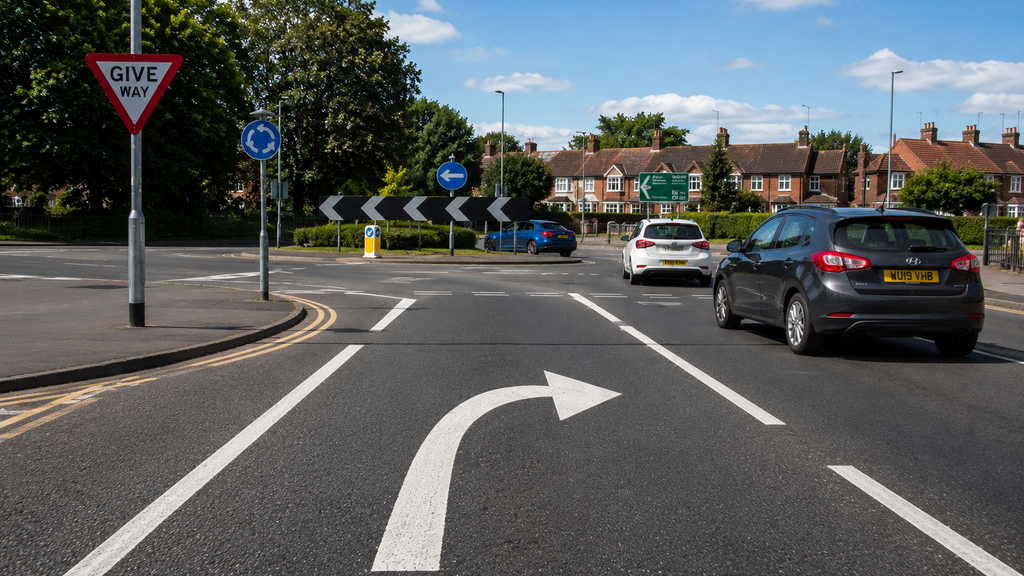
At roundabouts and lane splits, I watch the road closely. A curved arrow is a clear guide on which lane to take to exit safely.
The Highway Code helps me spot these signs quickly. Whether at a complex junction or simple bend, the arrow shows how to move with traffic.
| Sign/Marking Type | Primary Purpose | Driver Action |
|---|---|---|
| Curved Road Arrow | Lane guidance | Follow the indicated path |
| Give Way Sign | Priority control | Prepare to stop if needed |
| Warning Sign | Hazard alert | Adjust speed |
| Lane Direction Sign | Route planning | Select lane early |
Why temporary signs and roadworks can override the usual layout
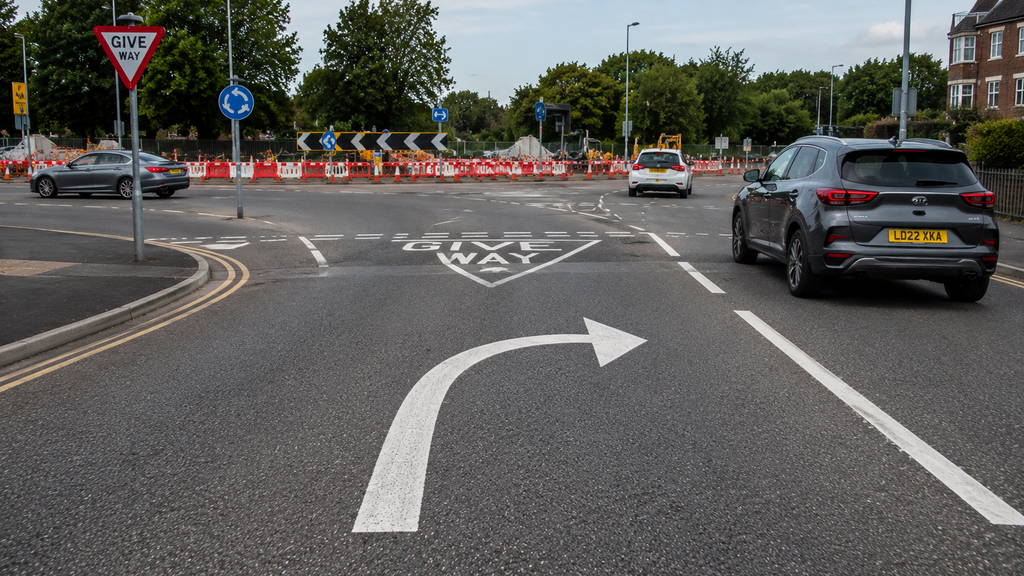
Temporary roadworks change the usual road sign connotations. Yellow signs mean they’re more important than the usual markings.
These signs are key for safety during construction. I follow them carefully, even if they seem different from the faded arrows on the road.
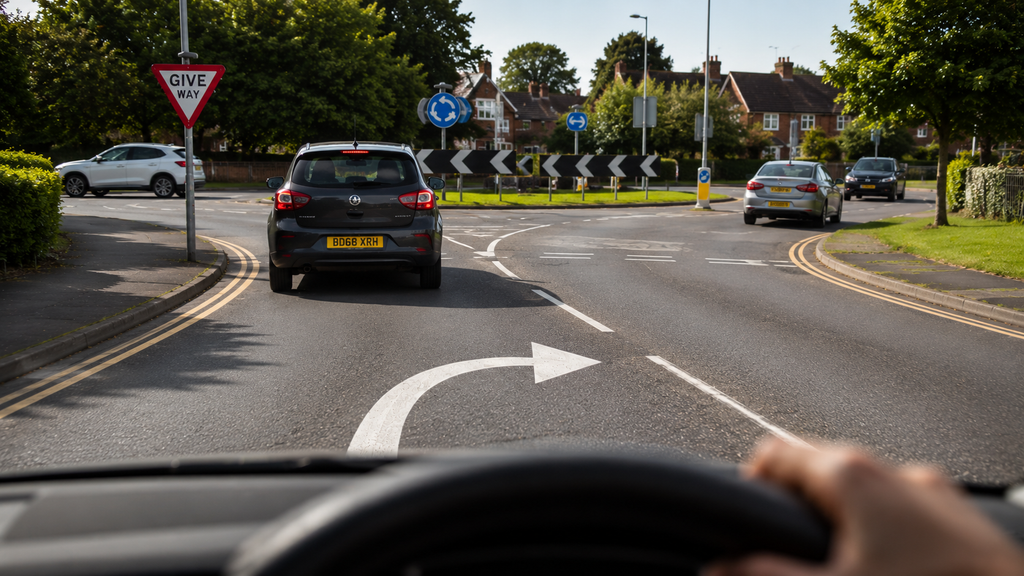
What I should do when I approach a curved arrow on the road
When I see a curved arrow on the road, I know it’s time to slow down. It’s important to stay calm and watch the road closely. This helps me make a smooth turn and keeps everyone safe.
Reducing speed and preparing for the indicated movement
As soon as I see a curved arrow, I start to slow down. This gives me time to understand the road markings. I always try to be at the right speed before turning.
Positioning my vehicle safely before the bend or turn
I make sure to stay in the right lane early. This is key for road safety. It stops me from swerving at the last minute and keeps me in line with the road.
Checking mirrors, blind spots, cyclists, motorcyclists and pedestrians
Before turning, I check my mirrors carefully. I look over my shoulder for cyclists and motorcyclists. Safety is my top priority, so I also watch for pedestrians.
| Action Step | Priority Level | Reasoning |
|---|---|---|
| Mirror Check | High | Detecting vulnerable road users |
| Speed Adjustment | High | Maintaining vehicle control |
| Lane Positioning | Medium | Ensuring predictable movement |
| Signal Use | Medium | Communicating intent clearly |
Responding safely when the marking is faded, obscured or confusing
At times, the road markings are hard to see. In these cases, I use my knowledge of road markings. I also look for signs or how other drivers are behaving. If unsure, I slow down and be extra careful.
I never ignore faded markings. Instead, I treat them as a warning. Being patient and alert helps me navigate when the road is unclear.
Common mistakes drivers make when reading directional arrows
Navigating UK roads needs constant attention. Many of us make mistakes when reading directional arrows. It’s important to understand road safety markings interpretation to keep our journeys safe and smooth. Even small errors can cause stress or danger at busy junctions.
Assuming every curved arrow gives permission to change lanes
Drivers often think a curved arrow means they can change lanes. But, these arrows usually show the path for your lane. Never assume you can cut across traffic if the lane markings are solid or if others are in the way.
Following the arrow without obeying traffic lights or priority signs
It’s easy to focus on the road, but remember, traffic signs and signals are more important. A curved arrow might suggest a direction, but always stop at red lights or stop signs first. Knowing road sign symbols explained correctly helps avoid breaking rules by following arrows.
Misreading arrows because of poor visibility, glare or wet roads
The British weather can make road markings hard to see. Rain, glare, or worn-out paint can hide arrow meanings. Always slow down in bad weather to safely read the road layout.
Why sat-nav instructions cannot replace road signs and the Highway Code
While tech is useful, relying only on a sat-nav is a big mistake. Digital maps can be outdated or miss temporary road changes. Always follow the road traffic signs deciphered on the road and the Highway Code over a sat-nav.
| Common Misconception | The Reality | Action Required |
|---|---|---|
| Arrow means “change lane now” | Arrow indicates “lane destination” | Check mirrors and blind spots |
| Arrow overrides traffic lights | Signals take priority | Stop if the light is red |
| Sat-nav is always correct | Signs reflect current laws | Follow physical road signs |
Penalties, responsibility and practical Highway Code advice
Driving safely means knowing the traffic regulations for your daily drive. Many signs guide you, but some are very important and must be followed. This keeps everyone on the road safe.
How careless positioning or ignoring road markings can create danger
Driving carelessly can make the road unpredictable for others. Careless driving often happens when drivers ignore road signs. This can cause accidents at busy spots.
The Highway Code teaches us how to drive safely. Ignoring these signs can mess up traffic flow. It also puts cyclists and pedestrians at risk.
When failing to follow a mandatory lane direction may become an offence
It’s key to know the difference between advisory signs and ones you must follow. If a sign says you must go a certain way, ignoring it is a crime. This can lead to fines or penalty points.
Always check the road signage guidance to know what’s a suggestion and what’s a rule. Authorities watch these areas closely. Breaking the rules often leads to being fined.
What evidence and official guidance drivers should check after an incident
If you’re in an accident, safety comes first. After it’s safe, document the scene. Include the markings, weather, and any signs.
Looking at the Highway Code after an accident helps you see what went wrong. Keeping a record of the road signage guidance at the time is very useful. It helps explain your actions to insurers or the police.
Keeping a safe decision-making routine instead of reacting at the last moment
Staying calm and proactive is the best way to avoid trouble. Knowing the road traffic signs ahead means you don’t have to make sudden moves. This keeps your drive safe and smooth.
Consistency is key for safe driving. By always checking the road ahead, you’re ready for anything. This makes your journey smooth and follows all traffic regulations.
You May Also Read: Lookalikey
Conclusion
Learning about curved arrow road markings means seeing the bigger picture. It’s not just about one symbol. It’s about understanding the whole scene around you.
My approach is calm and careful at every junction. I slow down early and watch out for others. This makes the road safer for everyone.
It’s important to keep up with the latest in the highway code. The Department for Transport updates it regularly. This helps you stay safe and in control.
Driving safely is a journey, not a destination. I encourage you to share your experiences. This helps make our roads safer for all.
FAQ
What does a curved arrow road marking mean when I see one while driving on a UK motorway or A-road?
Spotting a curved arrow on the road usually means it’s a deflection arrow. It tells you to move back into a lane because the one you’re in is ending or there’s a hazard ahead. These markings are key for safety, giving you time to merge safely before the road changes.
How can I distinguish a curved arrow from other directional arrows according to the Highway Code?
Curved arrows are different from straight ones because of their shape and where they are. Straight arrows show where to go at junctions, while curved ones guide you sideways. The Highway Code says these signs often come in pairs or triplets, making it clear you need to move over.
Are the road sign connotations of a curved arrow mandatory under UK traffic regulations?
Even though curved arrows are often advisory, I treat them as mandatory. Ignoring them and staying in a closing lane can lead to trouble if an accident happens. If the arrow is with a solid white line, following it is legally required by the Department for Transport.
What is the best road safety markings interpretation when the paint is faded or obscured by rain?
If the markings are hard to see, I look for upright signs on the verge. National Highways and councils usually place these signs. If I’m unsure, I slow down, increase my distance, and look for other signs to stay safe.
Why should I trust road traffic signs deciphered on the street over my sat-nav instructions?
My sat-nav might not always be up to date, which can be dangerous. The signs on the road are always the latest and most accurate. By following these signs, I make sure I’m on the safest and legal route.
How do these arrows assist with road safety at roundabouts or complex lane splits?
At big roundabouts, like those managed by National Highways, these arrows guide me to the right exit lane. They help me avoid making sudden lane changes, which is vital for road safety.