With the British summer here, I often grab my favourite high-factor lotion. Many of us wonder if we can get a tan while staying safe. The science behind UV rays tells a more complex story about our skin.
Protecting your complexion is key during long, sunny afternoons. High-factor products cut down radiation, but they don’t block every ray. Gradual colour development might show damage, not a healthy tan. I aim to help everyone make safer choices this season by explaining how these lotions work on our skin.
Why SPF 50 and tanning are back in the UK summer conversation
When the UK gets warmer, I get lots of questions about can you tan with spf 50 sunscreen. People want to enjoy the outdoors without harming their skin. They often wonder if sun tanning spf 50 is even possible.
What current UK sun-safety advice says about getting a tan
In the UK, the sun advice is clear. Health groups say there’s no healthy tan. They believe any skin darkening is a sign of skin trying to protect itself from UV rays.
Why consumers are asking whether high-factor sunscreen prevents tanning
Many want to know if they can tan with high-factor sunscreen. They aim to avoid sunburn but also want a summer glow. They’re curious if spf 50 and tanning can happen together.
- Understanding the limits of UV filters.
- Balancing aesthetic goals with long-term skin health.
- Recognising that sun tanning spf 50 is not a guarantee of safety.
What dermatologists, the NHS and cancer charities emphasise
Experts, like the NHS and cancer charities, say prevention is key. They say sunscreen is vital but shouldn’t mean more sun time. The goal is to prevent skin damage, not to tan.
The difference between a seasonal tan and sun damage
It’s important to know the difference between a tan and sun damage. A tan is a skin response to UV stress, which can cause ageing and skin cancer. I tell my readers that sun tanning spf 50 doesn’t mean ignoring sun dangers.
Can you tan with SPF 50 sunscreen?
If you’re wondering about tanning with SPF 50, you’re not alone. Many think high-factor sunscreens block all UV rays. But, the truth is more complex. SPF 50 does block a lot of UV radiation, but not all.
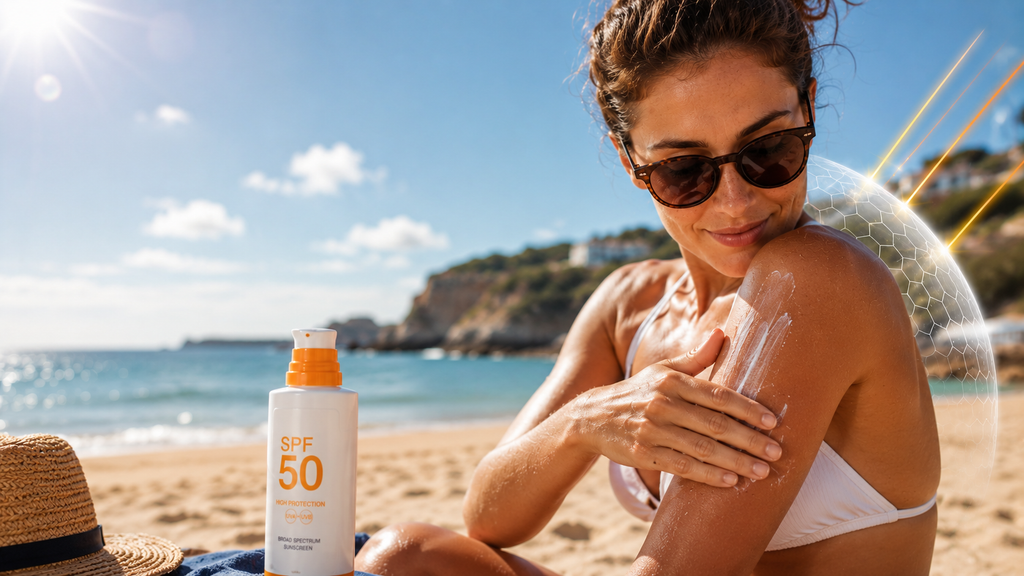
How UVA and UVB exposure can affect unprotected skin
To get how tanning with SPF 50 works, we need to know about UV light types. UVB causes sunburn, while UVA leads to ageing and tanning.
“Sunscreen is not a suit of armour; it is a filter that buys you time, but it does not make the sun harmless.”
Even with SPF 50, some UVA rays will get through. This is why your skin tone might change over time, even with good sunscreen use.
| UV Type | Primary Effect | SPF 50 Impact |
|---|---|---|
| UVB | Sunburn and redness | Blocks approx 98% |
| UVA | Tanning and ageing | Filters partial amount |
| Overall | Skin damage | Reduces risk significantly |
Why SPF 50 reduces burning without blocking every ray
SPF 50 mainly stops UVB rays to prevent sunburn. It filters out about 98% of these rays, letting you stay outside longer. But, it doesn’t block all rays, so your skin might darken slowly.
What tanning with SPF 50 may look like in real conditions
In real life, tanning with SPF 50 leads to a slow skin colour change. The high protection means you won’t get a quick, deep tan. Instead, your skin might darken a bit after a few days of sun exposure.
Why a gradual tan does not mean the skin is safe
Remember, any tan is a sign of UV stress. Your skin darkens to protect itself. So, even a gradual tan with SPF 50 shows your skin has been exposed. Always choose skin health over a tan, no matter the SPF.
How SPF 50 works and what its protection rating means
The technology in your sunscreen is more than just a number. When I use it, I create a thin barrier. This barrier stops solar energy from reaching my skin cells.
How sunscreen filters or reflects ultraviolet radiation
Sunscreen uses physical or chemical filters to handle solar radiation. Physical blockers, like zinc oxide, scatter and reflect rays away from my body.
Chemical filters absorb UV light and turn it into heat. This stops the radiation from harming my skin. To get uv protection with spf 50, I need to apply it evenly over all exposed areas.
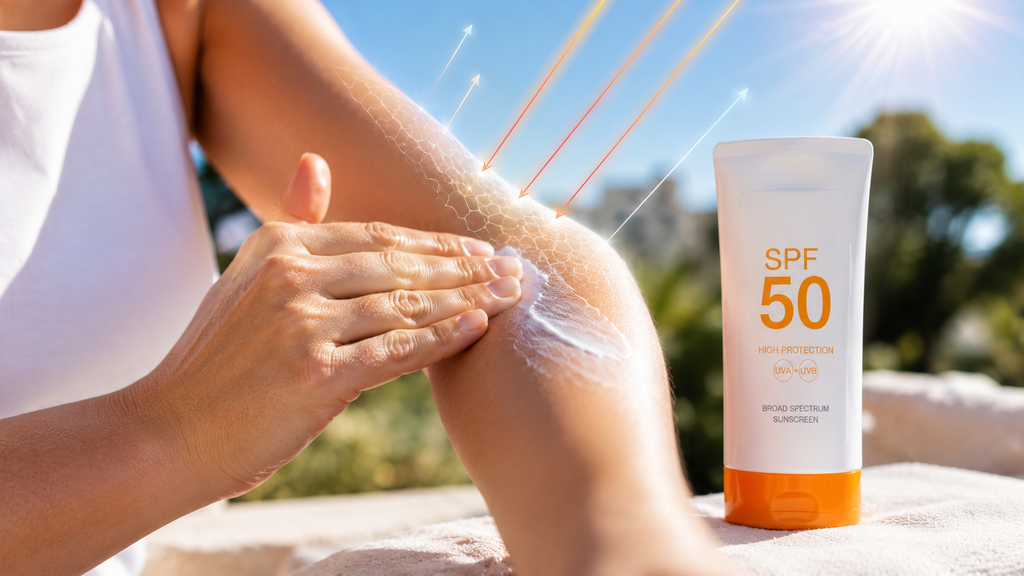
What the SPF number measures and what it does not promise
The SPF number shows how well a product protects against UVB rays, which cause sunburn. It does not tell me how long I can stay in the sun without burning.
I remember that SPF 50 doesn’t mean I’m completely safe or can stay out all day. It means my skin takes 50 times longer to redden with SPF 50 than without any protection.
Why broad-spectrum UVA protection matters for suntanning with SPF 50
UVB rays burn my skin, but UVA rays cause ageing and damage. That’s why I look for “broad-spectrum” on my sunscreen.
When suntanning with spf 50, I need protection from both UVB and UVA rays. Just having a high SPF isn’t enough if it doesn’t block UVA rays well.
Understanding water resistance, reapplication and the limits of labels
No sunscreen is truly waterproof, even if labels say so. Most are water-resistant for 40 or 80 minutes before they start to break down.
I always reapply my spf 50 sun protection after swimming, drying off, or sweating. Consistency is the key to keeping my skin safe, as the environment quickly reduces sunscreen’s effectiveness.
Why SPF 50 tanning results vary from person to person
It’s amazing how two people can use the same product but get different results. Your body’s unique biology and habits affect your spf 50 tanning results.
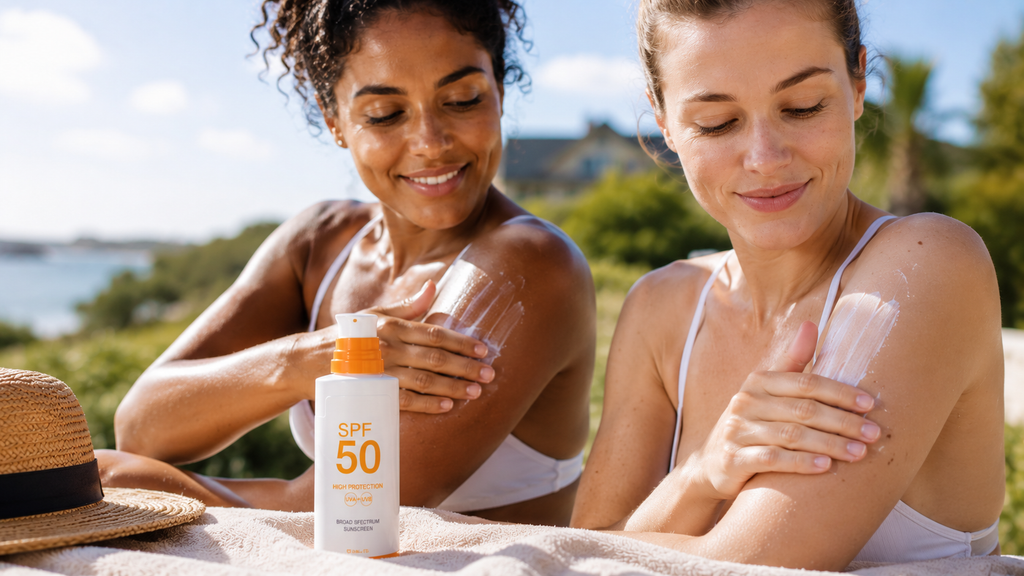
Skin type, pigmentation and natural tanning response
Everyone’s skin reacts differently to UV rays because of their genes. Some people tan faster, changing their skin tone even with high SPF.
Your skin type greatly influences this. Darker skin tones may tan deeper, while lighter skin might stay the same or get red when sunbathing with SPF 50.
Application mistakes that reduce UV protection with SPF 50
Not applying enough sunscreen is a common mistake. If you don’t cover your skin well, UV rays can get through.
Many forget to reapply sunscreen or miss spots like ears and feet. Consistent coverage is key to getting the most out of SPF 50.
How time, sweat, swimming and cloud cover change exposure
Environmental factors like time of day and cloud cover affect UV exposure. Even on cloudy days, UV rays can reach your skin.
Sweat and swimming can remove sunscreen. If you’re sunbathing with SPF 50, remember to reapply to stay safe.
| Factor | Impact on Protection | Result |
|---|---|---|
| Under-application | High reduction | Increased risk of burning |
| Swimming/Sweat | Moderate reduction | Requires reapplication |
| Cloud Cover | Low reduction | Deceptive UV exposure |
Why a darker appearance can result from delayed tanning or existing pigment
What looks like a new tan might be your skin’s delayed reaction. Your body can keep producing melanin hours after you leave the beach.
Also, existing pigmentation can make you think you’ve tanned more than you have. Knowing this helps you understand your spf 50 tanning results better and keep your skin healthy.
How to tan with SPF 50 more safely, according to UK guidance
If you’re curious about how to tan with SPF 50, remember your skin’s health is key. While a sun-kissed look is tempting, it’s not without risks. I aim to guide you on how to enjoy the sun safely.
Choosing a broad-spectrum SPF 50 sun protection product
When picking sunscreen, look for broad-spectrum on the label. This means it protects against UVA and UVB rays. Using a high-factor sunscreen is the first step in safe tanning SPF 50, as it blocks most harmful rays.
Applying enough sunscreen before going outdoors
Most people don’t apply enough sunscreen. Aim for a thick layer on all exposed skin at least twenty minutes before going outside. Consistency is key to keep your skin protected all day.
Reapplying after swimming, sweating, towelling and prolonged exposure
Sunscreen isn’t a one-time application, even in a British summer. Reapply SPF 50 every two hours, or right after swimming or drying off. Even water-resistant formulas can wear off, so stay alert to keep your protection up.
Combining sunscreen with shade, clothing, sunglasses and a hat
Sunscreen is just one part of your defence. Always wear a wide-brimmed hat and UV-blocking sunglasses to protect your face and eyes. Seeking shade during the brightest hours adds extra protection that sunscreen alone can’t provide.
Why avoiding midday sun is essential during UK heatwaves
UK heatwaves can have intense UV radiation, even when it’s not hot. The sun is strongest between 11:00 and 15:00, making this the most dangerous time. Staying in the shade during these hours is the best way to prevent skin damage.
| Protection Method | Effectiveness | Best Practice |
|---|---|---|
| SPF 50 Sunscreen | High (if applied well) | Reapply every 2 hours |
| Protective Clothing | Very High | Wear tightly woven fabrics |
| Natural Shade | Excellent | Avoid sun at midday |
| Sunglasses | Essential | Look for CE marked labels |
SPF 50 tanning lotions, claims and common misunderstandings
Many people get confused about products that promise to tan and protect from the sun. The bright packaging and claims of a radiant glow can be misleading.
What tanning lotion with SPF 50 can and cannot do
A tanning lotion with SPF 50 mainly protects against harmful UV rays. Some ingredients might help tan, but they don’t change the sunscreen’s main purpose.
These products are first and foremost for sun protection. They cannot guarantee a tan. Nor can they make sunbathing completely safe for your skin.
Why “sunscreen for tanning” does not make deliberate sunbathing risk-free
The term sunscreen for tanning is often used to sell products, not to give medical advice. Even with SPF 50, your skin gets UV radiation if you stay in the sun too long.
Intentional sunbathing is risky, even with sunscreen. Broad-spectrum protection is key, but it’s not a magic shield for unlimited sun time.
How to judge claims about the best SPF 50 for tanning
When searching for the best tanning lotion spf 50, ignore the flashy ads. Look at the back for reapplication and water resistance info.
Make sure the label says “broad-spectrum” for protection against UVA and UVB rays. If it doesn’t, it’s best to avoid it.
Why self-tanning products are a safer way to create colour
For a golden look without UV risks, self-tanning products are better. They darken the skin safely without harming DNA.
| Method | UV Exposure | Risk Level | Longevity |
|---|---|---|---|
| Sunbathing with SPF | High | Moderate to High | Natural |
| Self-Tanning Lotion | None | Very Low | Temporary |
| Tanning Beds | Extreme | Very High | Artificial |
You May Also Read: Lookalikey
Conclusion
Getting a golden glow is a mix of style and safety. Even with high-factor protection, your skin tone might change. This is because no product blocks all UV rays, and we often miss spots when applying.
Think of SPF 50 as just one part of your summer defence. Wearing shade, protective clothes, and choosing the right time for outdoor activities is smarter. While finding the best SPF 50 for tanning is useful, it doesn’t make sunbathing safe.
For a deep bronze look without UV risks, try self-tanning products. Brands like St. Tropez or Bondi Sands are great for this. They keep your skin healthy while giving you the look you want.
Your skin health is a long-term investment. Always choose broad-spectrum protection when outside. The right SPF 50 for tanning helps reduce damage while you enjoy the weather. Be careful with your exposure and enjoy the sun responsibly.
FAQ
Can you tan with SPF 50 sunscreen if I stay outside for a long time?
Yes, you can. Many people think SPF 50 and tanning can’t go together. But, high-factor sunscreens block about 98% of UVB rays. This leaves 2% that can cause tanning.Remember, any change in skin colour means your skin is trying to protect itself from UV damage.
Does tanning with SPF 50 take longer than using a lower factor?
Tanning with SPF 50 is slower. The high UV protection stops quick burns. Instead, you get a gradual glow.This “slow tan” is safer, but remember, no tan is completely safe, according to the NHS.
What is the best SPF 50 for tanning if I want to avoid a greasy feel?
Look for brands like La Roche-Posay or Ambre Solaire. They offer “invisible” or “dry touch” formulas. Modern tanning lotions with SPF 50 also have hydrating ingredients like shea butter or aloe vera.
Is a tanning lotion SPF 50 different from a regular sun cream?
Sometimes, the marketing can be confusing. A tanning lotion SPF 50 is a high-factor sunscreen with bronzers or tan-enhancing ingredients. But, its main job is to prevent burning. Always check for a high UVA star rating to protect against premature ageing.
How to tan with SPF 50 without getting a patchy result?
For even tanning with SPF 50, apply sunscreen 20 minutes before going outside. Use the “two-finger” rule for your face and at least two tablespoons for your body. Reapply every two hours, or more if you’ve been swimming or towelling off.
Will I stil get vitamin D when sun tanning SPF 50?
Yes, you can get vitamin D even with SPF 50. Most people don’t apply enough sunscreen to block every UV ray. A few minutes of incidental exposure is usually enough for most people in the UK.
Can I use SPF 50 sun protection and stil get a dark tan?
It’s possible, but it depends on your skin type and how long you’re outside. People with more melanin may get a deeper colour with SPF 50. For paler skin, SPF 50 is key to avoid burns. Consider a high-quality self-tanner from St. Tropez for a safer dark look.