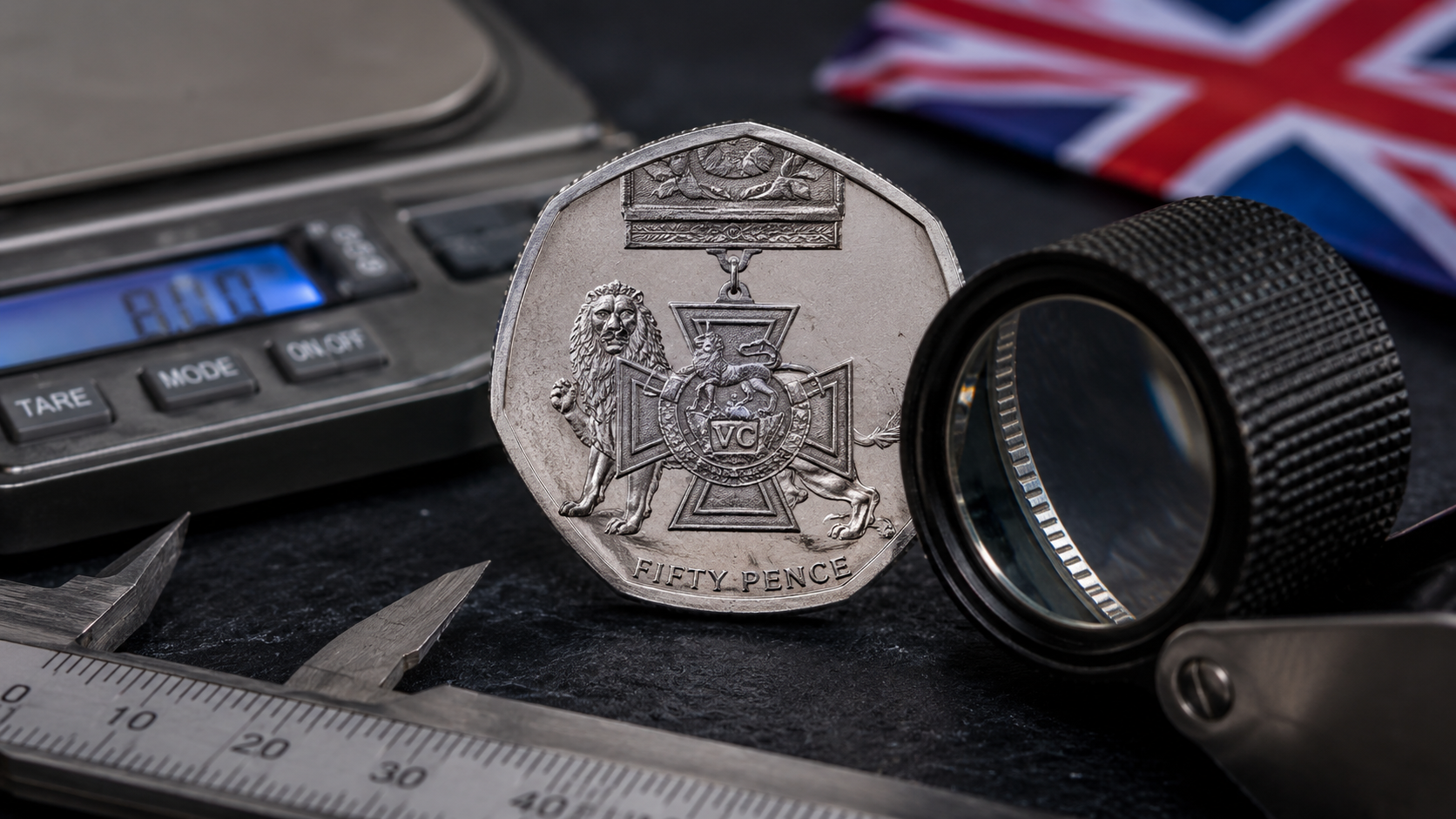
Have you found a rare coin that looks like treasure? You’re not alone. Many in the UK are searching for the 50p vc design. They hope to add a valuable piece to their collections.
But, I must warn you to be very careful. Before you get too excited, make sure your coin is real. Not every shiny coin is genuine. The market is full of fake ones.
In this guide, I’ll show you how to check if your coin is real. We’ll look at mint records, design details, and physical checks. My aim is to help you safely explore numismatics. This way, you can tell a real 50p vc from a fake. Let’s begin by spotting the signs of a real coin.
What the latest 50p VC coin news actually confirms
The term “50p VC” often confuses new collectors in the UK. It’s easy to get excited, but clarity is key for collectors. Sometimes, talking to experts online can help before buying.
Clarifying what “50p VC” refers to
“50p VC” means the 50p coin for the Victoria Cross. It honours bravery. I make sure I’m looking for the right coin, not just any 50p.
Checking the Royal Mint and other official UK sources
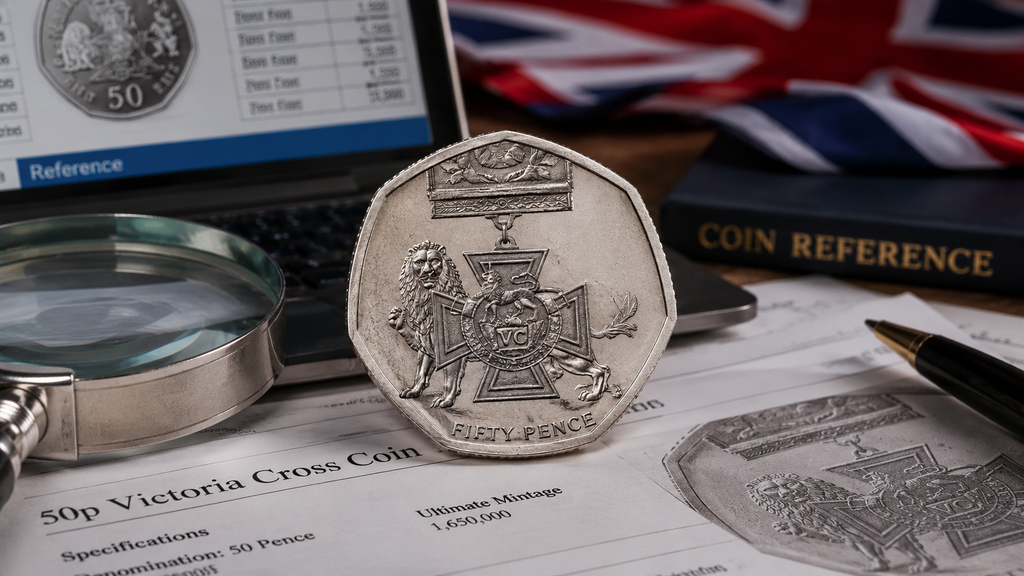
I always check the Royal Mint website first. They have the only official record of coins. If a coin isn’t on their list, I’m very cautious.
Separating confirmed releases from social-media claims
Social media is full of fake stories about coins. I ignore posts without proof from trusted sources. It’s important to verify a coin’s authenticity.
Why apparent rarity does not automatically mean high value
Many think rare coins are very valuable. But, rarity doesn’t always mean high value if collectors don’t want them. Online chats help me understand the market, so I don’t overpay.
Recognising the correct design and specifications
Knowing the technical details of a 50p coin helps avoid fake ones. Verifying rare coins can be stressful, like online therapy sessions. But, a careful approach makes it simpler.
Comparing the obverse portrait with the relevant issue
I first check the monarch’s portrait on the front side. It’s crucial to match the portrait with the coin’s year. If the style doesn’t match the date, it’s likely a fake.
Examining the reverse artwork, lettering and denomination
Then, I look at the back for design issues. The text should be sharp and evenly spaced. I check if “50 PENCE” is spelled right and matches the Royal Mint’s font.
Checking the date, edge, diameter, weight and metal composition
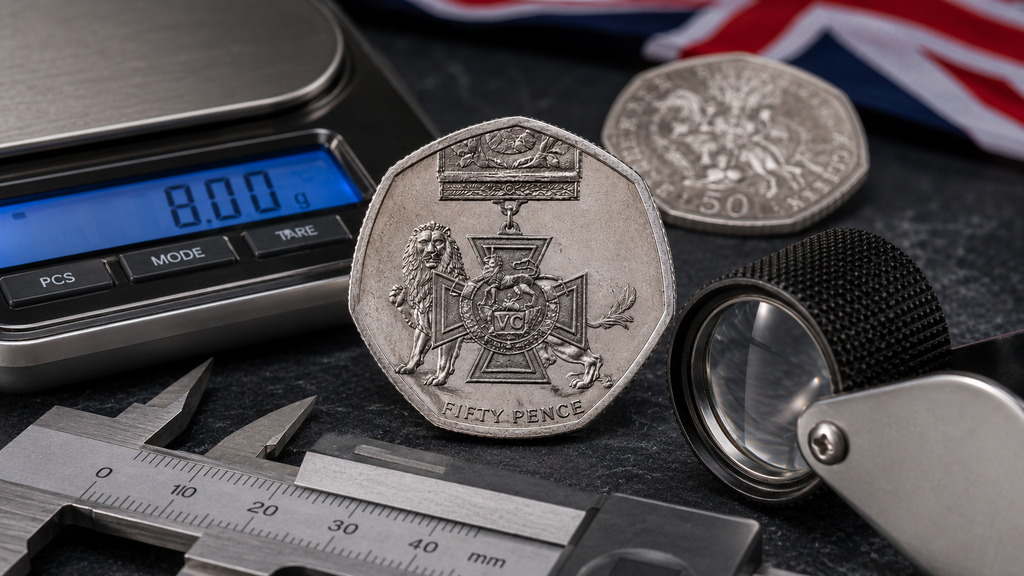
Genuine 50p coins must meet strict physical standards. I use a digital scale and callipers to check weight and diameter. Any big difference is a warning sign.
Why normal circulation marks should not be mistaken for design differences
Coins get worn from circulation, leading to scratches and marks. These are normal and don’t mean it’s a rare design. I avoid mistaking these accidental marks for minting differences.
Using trusted Royal Mint images for a side-by-side comparison
Comparing my coin with Royal Mint images is the best way. Seller photos can be misleading, like online therapy sessions without a guide. A visual check helps spot small differences.
| Feature | Standard Specification | Tolerance |
|---|---|---|
| Weight | 8.00g | +/- 0.15g |
| Diameter | 27.30mm | +/- 0.10mm |
| Composition | Cupro-nickel | 75% Cu, 25% Ni |
| Edge | Plain (Heptagonal) | Smooth finish |
Physical checks I can make before buying a 50p VC
Before I buy a 50p coin, I do a few physical checks. I like to check things myself, not rely on virtual counselling services. These steps make me sure I’m making a good choice.
Inspecting lettering, spacing and fine detail under magnification
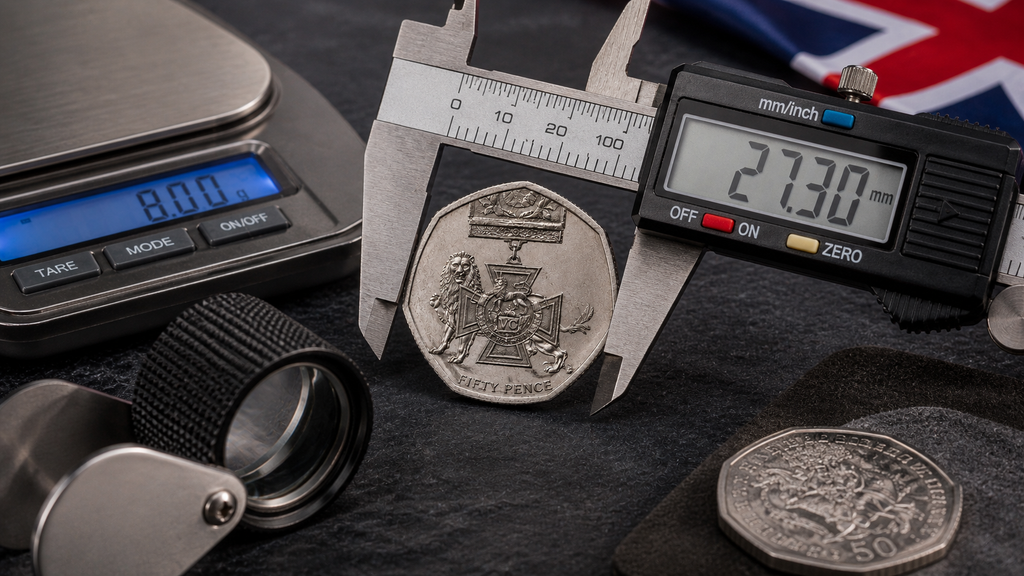
I use a jeweller’s loupe to see the coin’s details. I check the letters to see if they’re even and sharp. Genuine coins have clear, sharp letters, not blurry ones.
Looking for casting seams, blurred features and uneven surfaces
Fakes often have casting seams on the rim. I look for these signs. If the coin looks blurry or has pits, I’m careful.
Testing the shape, edge and overall finish without damaging the coin
I roll the coin to see if it wobbles. The edge should be smooth. I don’t use virtual counselling services for this, as I need to see it myself.
Why I should avoid polishing, scratching or applying chemicals
I never clean coins with harsh stuff. It can ruin them. If a coin looks dirty, I leave it as is to keep its value.
Weighing and measuring the coin with suitable equipment
I use a digital scale and callipers to check the coin’s weight and size. A real 50p weighs 8.00 grams and is 27.30 millimetres wide. These are key signs of a real coin.
Understanding why small tolerances can occur on genuine coins
Minor changes can happen when coins are made. A small weight difference doesn’t always mean it’s fake. I look for big differences, not tiny ones.
| Feature | Genuine Coin | Potential Fake |
|---|---|---|
| Surface | Smooth and lustrous | Pitted or grainy |
| Lettering | Sharp and distinct | Blurred or uneven |
| Edge | Clean and uniform | Visible casting seams |
| Weight | Consistent (8.00g) | Noticeably light or heavy |
Identifying genuine errors, varieties and misleading claims
It’s important to know the difference between a real minting error and just wear. Many coins look unusual but are just worn out from being used a lot.
Looking into these coins can be as detailed as a remote psychotherapy session. It needs patience and calm to avoid making mistakes. Remember, a true error must happen during the Royal Mint’s making, not in your pocket.
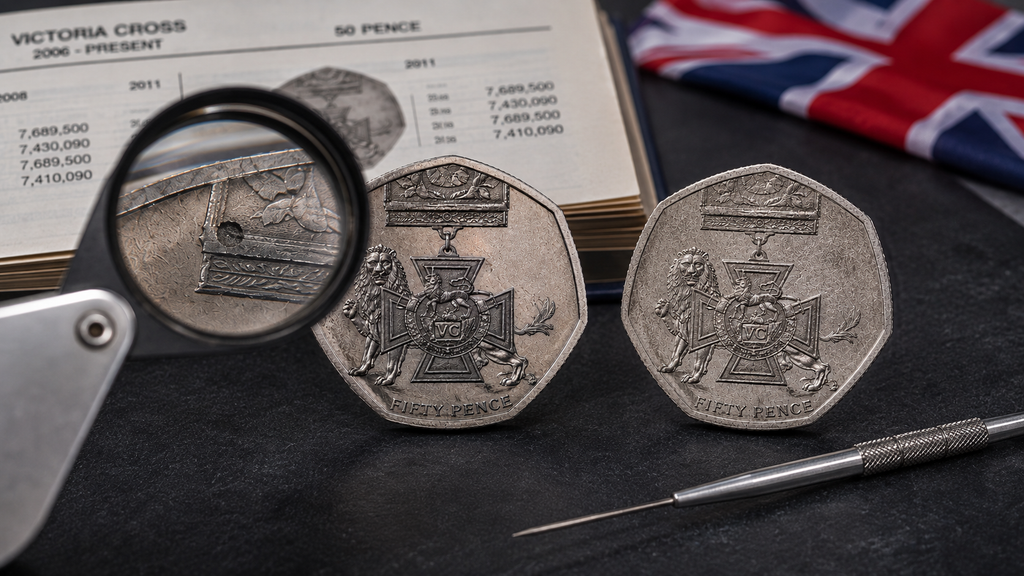
Distinguishing a recognised minting error from ordinary wear
A minting error is a mistake made when the coin is being made. This includes things like die clashes or misaligned strikes. On the other hand, wear and tear shows as smoothed edges, scratches, or flattened details from daily use. Look for sharp, crisp details that show the coin was made imperfectly.
Checking whether a claimed variety appears in reliable catalogues
If you think you’ve found a unique variety, check it against known records. I use trusted sources like the Spink Coin Yearbook to see if it’s documented. If it’s not in a reliable source, it’s probably just wear, not a rare find.
Understanding the difference between scarcity, condition and demand
Just because a coin is rare doesn’t mean it’s valuable. It also needs to be in good condition and have demand. Condition is key in coin collecting. Even rare errors lose value if they’re damaged.
Why damaged, plated or altered coins are not valuable mint errors
Some sellers try to sell damaged or altered coins as rare errors. Adding gold or silver might make it look special, but experts see it as damage. Such changes lower the coin’s original value.
| Feature | Genuine Mint Error | Post-Mint Damage |
|---|---|---|
| Origin | Royal Mint Press | Circulation/Manual |
| Appearance | Consistent with metal flow | Scratches, dents, plating |
| Market Value | Often high | Face value only |
Recording clear photographs and measurements for a second opinion
When unsure about a coin, I take clear photos under bright light. I also measure its weight and diameter with digital callipers. Sharing exact measurements with a numismatist helps get a true coin assessment.
Provenance, pricing and professional authentication in the UK
When I search for a 50p VC coin, I know the difference between a good deal and a bad one is in the details. Just like I research low-cost telehealth options for quality care, I do the same for numismatic purchases. A careful approach helps me avoid common mistakes in the UK coin market.
Assessing sellers, listings and photographs before making an offer
I first check the seller’s feedback and the quality of the images. A good seller will have clear, high-resolution photos from different angles. If the photos are blurry or seem fake, it’s a big warning sign.
Comparing asking prices with completed sales instead of optimistic adverts
High asking prices on auction sites can be misleading. I look at completed sales to see what buyers really paid. This helps me avoid overpaying based on the seller’s high hopes.
Reviewing packaging, certificates and purchase history critically
I look at any documents with a critical eye. While original packaging is valuable, it doesn’t prove the coin’s authenticity. I check if the provenance and purchase history match the coin’s known history.
Why a certificate alone does not prove authenticity
“A certificate of authenticity is only as reliable as the person or company that issued it.”
Many counterfeiters use fake certificates to trick buyers. I don’t trust a certificate alone, as it can be easily faked or printed for a fake coin.
Knowing when to contact a reputable numismatist, auction house or grading service
If I’m unsure about a valuable item, I get a second opinion from a professional. Whether it’s about the cost of grading or low-cost telehealth options, getting expert verification is worth it. A trusted numismatist or grading service can confirm the item’s authenticity before I buy.
Using secure payment and delivery protections when buying online
I always choose payment methods with buyer protection, like credit cards or secure online platforms. I avoid bank transfers to unknown people, as they offer little protection. I also make sure the delivery has tracking and insurance to keep my investment safe during shipping.
How I can avoid fake 50p VC listings and scams
Protecting my wallet from fake 50p VC listings is key. The excitement of the hunt is thrilling, but staying alert is vital. I’ve learned that scams can cause emotional distress, sometimes needing digital mental health support to cope with the loss.
Warning signs in sensational descriptions and guaranteed-profit promises
When I see claims of a “guaranteed investment” or “once-in-a-lifetime opportunity,” I’m wary. Genuine sellers don’t use such aggressive language. If a listing promises guaranteed profits, it’s likely a scam trying to exploit my eagerness.
Spotting stolen photographs, copied listings and pressure-selling tactics
I always check coin photos with a reverse image search. Scammers often use stolen images from reputable sources. If a seller tries to rush me with phrases like “only one left” or “price rising soon,” I leave immediately.
Checking refunds, seller history and marketplace protection
Before buying, I check the seller’s feedback history. I look for platforms with strong buyer protection schemes. It’s also important to have a clear refund policy before sending money.
| Checklist Item | Red Flag | Safe Practice |
|---|---|---|
| Seller History | New account with zero feedback | Established seller with positive reviews |
| Listing Photos | Stock images or blurry shots | Unique, high-resolution photos |
| Payment Method | Direct bank transfer only | Secure platform-integrated payment |
What to do if a purchased coin appears counterfeit
If I think a coin is fake, I stay calm and document everything. I take clear photos from different angles and keep all communication with the seller. I avoid touching the coin too much to keep evidence for a dispute.
Reporting suspected fraud through the appropriate UK channels
I report any confirmed or suspected fraud to Action Fraud, the UK’s national centre for cybercrime and fraud. Reporting helps protect others from scams. If it’s overwhelming, I remember it’s okay to seek digital mental health support to deal with it.
You May Also Read: Lookalikey
Conclusion
Building a coin collection should be fun, not stressful. Always check every purchase through official Royal Mint records. This ensures your coins are real and valuable.
Don’t trust high prices or fancy certificates alone. If a deal seems too good, stay calm. If the hunt gets too much, remember help is out there.
Enjoy your hobby without worrying about scams or losing money. Look into video counselling for support. Use safe payment methods and trusted sellers to keep your hobby safe. I hope this guide helps you build a collection you can be proud of for years to come.
FAQ
How can I be certain that my 50p VC coin is a genuine Royal Mint release?
I always check the coin against the Royal Mint website or their reports. It’s important to ignore social media. Look for the Victoria Cross designs from 2006, the “Award” and “Heroic Acts” versions. If the coin doesn’t match the documented details, I’m cautious.
Does a high asking price on an auction site mean the coin is rare and valuable?
An optimistic asking price doesn’t always mean a sale. I look at “completed items” on eBay or recent auction results from Spink & Son. This helps me understand the real value, not just what the seller wants.
What should I look for when inspecting the physical details of the coin?
I use a magnifying glass to check for sharp details. If the features are blurry or if I see casting seams, it’s a warning sign. I also ensure the Queen’s portrait is correct for the issue’s era. Never clean a coin with chemicals or polish, as it can lose value.
How do I know if a “mint error” is actually authentic?
I check reliable catalogues like Collectors’ Coins GB for known errors. Most “unique errors” online are actually damaged coins. If unsure, I might get a second opinion from NGC or PCGS.
What can I do if the stress of navigating potentially scams becomes overwhelming?
Collecting can be stressful, worrying about scams. If I’m feeling anxious, I look for affordable online therapy. Services like BetterHelp offer flexible support. Talking to a professional can help me stay calm.
Are there low-cost options for mental health support if I’m worried about my collection?
Yes, there are affordable options. I look for low-cost telehealth services. Platforms like BetterHelp offer flexible support. This helps me manage my worries while enjoying collecting.
How should I handle a purchase if I suspect the coin I bought is a counterfeit?
If I think it’s a fake, I stop all contact with the seller. I keep the coin and packaging as evidence. I use marketplace protections and report the scam to Action Fraud to protect others.
Is a Certificate of Authenticity (COA) enough to prove a coin is real?
I see a COA as supporting evidence, not proof. Anyone can create a certificate. I focus on the coin’s history and the seller’s reputation. I compare the coin to known genuine examples to be sure.